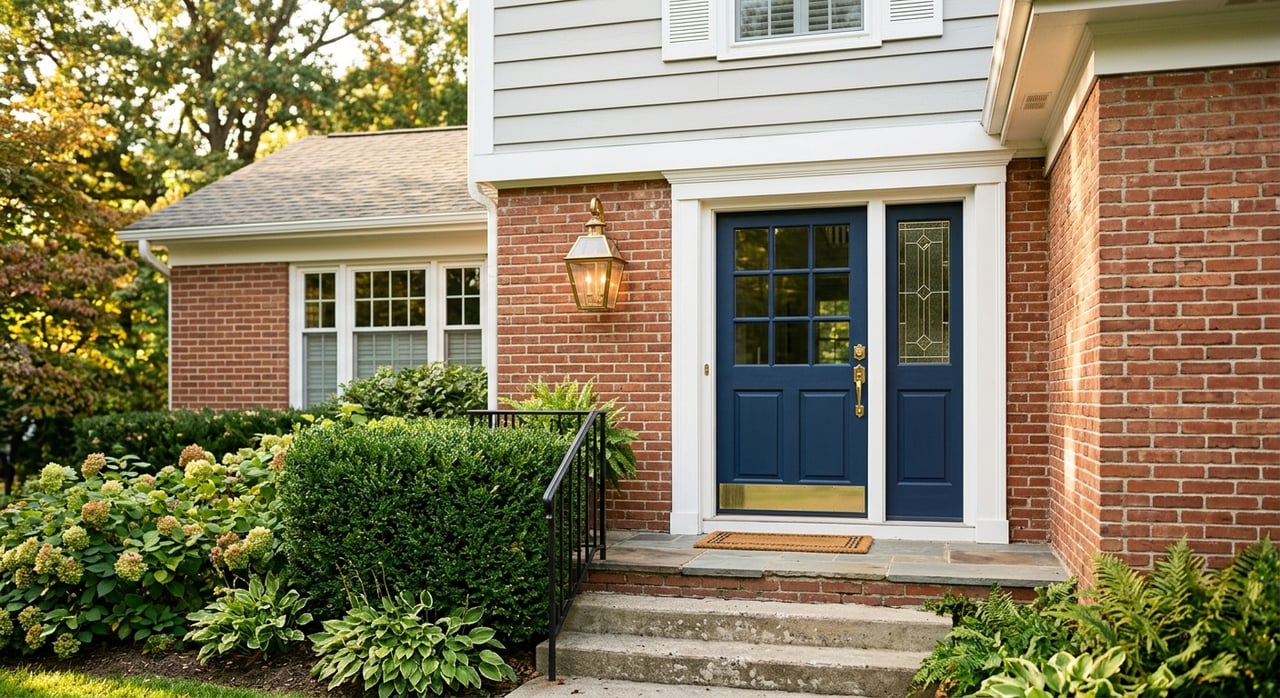
A Practical Guide to Brockville Homes for GTA Buyers
April 23, 2026
April 23, 2026
Thinking about leaving GTA price tags behind without giving up convenience, character, or access to the water? If Brockville is on your radar, you are not alone. For many buyers, this part of Eastern Ontario offers a very different pace and price point, plus a mix of historic homes, suburban options, and riverfront lifestyle appeal. In this guide, you will get a practical look at what Brockville offers, how it compares with the GTA, and what to check before you buy from a distance. Let’s dive in.
For many buyers, the first reason to look at Brockville is affordability. In March 2026, the GTA average selling price reported by TRREB was $1,017,796, while the Rideau-St. Lawrence board reported an average price of $525,247 in February 2026, with an MLS HPI composite benchmark of $522,200 and a single-detached median price of $570,000 in Q4 2025. While these figures do not compare identical geographies or months, they still show a meaningful price gap between the GTA and the broader Leeds and Grenville market area, according to TRREB and the Rideau-St. Lawrence market data.
That gap can change what feels possible in your search. Depending on your goals, you may be able to look at more space, a larger lot, a different home style, or a location closer to the river than what your budget would allow in the GTA.
Brockville also offers an established small-city setting. Statistics Canada reported a population of 31,661 in the Brockville census agglomeration in 2021. Within the city, 57.1% of households were owner-occupied, and single-detached homes made up 47.5% of occupied private dwellings, based on the 2021 Census profile.
Affordability does not mean unlimited choice. In February 2026, the Rideau-St. Lawrence board reported 113 sales, 270 new listings, 715 active listings, and 6.3 months of inventory, based on CREA board statistics.
For you as a buyer, that points to a market where there is real selection, but not the same depth you may be used to in the GTA. If a home fits your budget, condition expectations, and location goals, it is smart to be prepared with financing, a clear shortlist, and a plan to act quickly.
This matters even more in a city like Brockville, where housing types can vary a lot from one street to the next. A move-in-ready suburban home, a character property near downtown, and a river-view home can all serve very different goals, so your search strategy should be specific from the start.
Brockville’s appeal is not just about price. It is also about how the city feels day to day. The city notes that a large portion of its waterfront is public parkland, and the Brock Trail is a 10 km paved multi-use path that links waterfront areas and green space, including places like St. Lawrence Park and Blockhouse Island.
If you are looking for a lifestyle shift, that public waterfront access can be a major part of the draw. It gives you room to enjoy the river, trails, and open space without needing to own directly on the water.
The city has also continued investing in these spaces. Its 2025 budget funded waterfront amenities and Brock Trail expansion, which supports the idea that public-realm improvements remain part of Brockville’s long-term planning, according to the city’s parks and trails information.
If you plan to split time between the GTA and Brockville, travel options matter. Brockville has access to Highway 401, and VIA Rail’s Brockville station is staffed daily from 9:15 a.m. to 5:30 p.m., with trip-planning tools available online.
That flexibility can help if you are doing weekend scouting trips, inspection visits, or occasional stays after closing. It also gives you more than one way to reach the city, which can make long-distance buying feel more manageable.
Within the city and surrounding area, Brockville Transit runs weekday, evening, and Saturday service. The River Route also links Brockville with Augusta, Prescott, and Edwardsburgh Cardinal on a two-hour loop six times per weekday, which can be useful if local transportation is part of your planning.
Brockville’s local relocation guide uses broad area names rather than narrow MLS-style micro-neighbourhoods. For GTA buyers, these area labels are a practical way to understand how housing style and setting can change across the city, based on the city’s relocation guide.
The West End runs from the river north to the railway tracks and west of Perth Street to the city limits. According to the city’s relocation guide, the housing mix ranges from heritage-style homes near the waterfront to newer modern builds, including executive homes with river views and older brick homes.
If you want character and river proximity, this area may stand out. If you want a newer finish, options may still exist here, but they will not all feel the same from block to block.
Downtown extends from the river to the CN line between Perth Street and Park Street. Housing types include heritage stone and brick homes, apartments above stores, townhouses, duplexes, and condos near the river, based on the city’s relocation guide.
This area can appeal if you value walkability, historic character, and close access to parks and trails. It is also worth noting that Brockville’s Official Plan update identifies the Downtown and Central Waterfront as a mixed-use node and intensification area, which may matter if future land use and redevelopment context are part of your decision.
The East End runs from the river to the railway line between Park Street and the city limits at Oxford Avenue. The city describes this area as having heritage dwellings, with a row of older mansions on King Street closer to downtown.
If you are drawn to older architecture and established streetscapes, this area may be worth a close look. With older homes, condition, maintenance history, and renovation scope become especially important.
The Central area sits between the CN railway line and Highway 401. According to the relocation guide, homes are generally up to about 60 years old, usually well maintained, and often on generous lots.
For many buyers, this can feel like a practical middle ground. You may find more traditional family-home layouts and lot sizes that are harder to find in more price-sensitive GTA markets.
The North End refers to development north of Highway 401 to the city limits. Housing here grew with 1970s-era development and includes bungalows, split-level homes, modern two-storey homes, executive styles with attached garages, apartment clusters, and senior residences, according to the relocation guide.
If you are looking for a more suburban feel, this area may be a strong fit. Buyers who prioritize functional layouts, garages, and more conventional street patterns often start here.
One of the biggest differences between Brockville and many newer GTA communities is the range of housing stock. Waterfront-adjacent and historic areas often lean toward character homes, duplexes, and mixed-use properties, while the North End and Central areas tend to feel more suburban and mid-century in style, based on the city’s relocation guide.
That variety is part of Brockville’s appeal, but it also means you should look closely at condition. An older home may offer charm, masonry detail, or a great location, but it may also come with updates, repairs, or layout compromises that are less common in newer subdivisions.
If future plans matter to you, this is where local guidance becomes valuable. A design-conscious local agent can help you see not just what a property is today, but how it may function for your lifestyle, renovation goals, or long-term use.
If you are house hunting from the GTA, the process can still be very manageable with the right preparation. CMHC’s step-by-step homebuying guide outlines the key stages, including budgeting, financing, inspections, appraisals, and legal steps with your realtor, lawyer, and lender.
Ontario’s consumer guidance, referenced within CMHC’s materials, also notes that home inspectors provide a written report on the property’s condition and that real estate documents can be signed electronically. That can make long-distance coordination much smoother when you cannot be present for every step.
In practical terms, remote buyers usually benefit from a clear system:
A lower purchase price does not mean skipping the math. CMHC notes that closing costs typically run about 1.5% to 4% of the purchase price, and final signing generally happens at a lawyer or notary office, where funds are released, the seller is paid, the home is registered, and keys are delivered, according to its homebuying guide.
You will also want to factor in property taxes. The city states that Brockville property taxes are based on assessed value and the applicable tax rate. Its 2026 property tax information notes a 3.99% increase to the average residential property tax bill, which equals about $172 annually for a home assessed at $250,000.
If you are comparing a GTA move with a Brockville purchase, these details help you build a more accurate monthly and annual budget.
This is especially important if you are buying an older home, a central property, or something you hope to adapt over time. Brockville’s Planning Department and zoning information note that the Official Plan and Zoning By-law guide development, and pre-consultation is required before an Official Plan amendment application.
The city also identifies the Downtown and Central Waterfront as key growth areas. If you are thinking about renovations, additions, or possible conversion plans, zoning verification should be part of your due diligence before you commit.
That does not mean every property has complex hurdles. It just means you should confirm what is permitted instead of relying on assumptions, especially when a home’s age, layout, or location suggests future flexibility.
For the right buyer, it can be. Brockville offers a lower price band than the GTA, practical access by rail and highway, public waterfront amenities, and a housing mix that includes both character properties and suburban homes. It is not a one-size-fits-all market, which is exactly why local insight matters.
If you are considering Brockville, the goal is not simply to buy cheaper. It is to buy smarter for the life you want to live, whether that means more space, a river-oriented lifestyle, a second home, or a property with long-term flexibility. If you want local guidance on Brockville homes, area fit, or how to buy from a distance, connect with Gerard Cabrera for a practical, design-aware approach to your move.
Stay up to date on the latest real estate trends.
Get assistance in determining current property value, crafting a competitive offer, writing and negotiating a contract, and much more. Contact me today so I can guide you through the buying and selling process.