Elizabethtown Kitley Rural Homes for Hobby Farm Buyers
April 2, 2026
April 2, 2026
Dreaming about more space, a barn, a few animals, or simply a quieter place just outside Brockville? Rural living in Elizabethtown-Kitley can offer that lifestyle, but it also comes with rules and responsibilities that are easy to miss if you only focus on the house. If you are thinking about buying a hobby farm or acreage property, this guide will help you understand zoning, servicing, and the key questions to ask before you make a move. Let’s dive in.
Elizabethtown-Kitley gives you a chance to enjoy rural living while staying close to Brockville and the broader Leeds and Grenville area. For many buyers, that means more privacy, more land, and space for outbuildings, gardens, or small-scale agricultural use.
The township’s official plan makes it clear that most of the township is designated Rural, with an emphasis on preserving rural character and allowing only modest, compatible development. It also notes that rural lands near Brockville have historically seen more development pressure, while settlement areas like Lyn, Tincap, Addison, Toledo, and Jasper are intended to absorb more concentrated growth.
When you buy a rural property, you are not just buying a home. You are also buying into a specific land-use framework, along with private systems and ongoing maintenance that are often very different from what you would expect in town.
That can be a great fit if you want more independence and flexibility. It also means you should be ready to verify zoning, understand servicing, and confirm that the property supports the way you plan to use it.
If you are shopping for a hobby farm, one of the most important local distinctions is the difference between Rural (RU) zoning and Agriculture (AG) zoning. This single detail can shape what you can do with the property.
According to the township’s agriculture and zoning guidance, livestock is permitted on RU lots only when the lot is greater than 4 hectares. On AG lots, livestock is permitted on any size lot, but AG lands come with a different long-term planning purpose.
RU zoning is often what buyers picture when they think about a rural residence with some extra flexibility. The township says RU permits uses such as agricultural use, single dwellings, home-based businesses, hobby kennels, on-farm diversified uses, bed and breakfasts, and wayside pits or quarries.
RU also requires 45 meters of frontage, allows one dwelling per lot, and requires a minimum lot area of 4 hectares where the use includes livestock. So if you want chickens, horses, or other animals, lot size matters right away.
AG zoning is intended to protect prime agricultural land. Under the township’s official plan, this designation supports crops, livestock, agri-tourism, and agriculture-related uses, but it does not allow new residential building lots.
The plan also says that when new lots are allowed for agricultural uses, they are generally expected to be at least 40 hectares. In practical terms, AG can support real agricultural activity, but it is often more restrictive if your main goal is simply to create a new country home lot.
A rural parcel may look large enough for future severance or intensification, but local planning rules can say otherwise. The township’s official plan states that in the Rural designation, residential uses are generally limited to single dwellings on one lot.
It also says new residential lots are intended to be limited to the consent process, and plans of subdivision for residential use are not permitted in the Rural designation. If future lot creation is part of your plan, you will want to confirm that possibility early rather than relying on assumptions.
If you are considering livestock or any animal-related use, Minimum Distance Separation rules can have a major impact. The township notes in its official plan that new farm and non-farm development in agricultural areas must comply with Minimum Distance Separation I and II requirements.
These rules are meant to reduce odour issues and land-use conflict between agricultural uses and nearby properties. For you as a buyer, this means enough land alone may not be the only factor. The property’s location, surrounding uses, and setbacks can all matter.
Elizabethtown-Kitley offers a Map It GIS tool with zoning and official-plan layers, and it is a very useful starting point. You can use it to check the parcel’s general designation and begin understanding the development context around the property.
That said, the township also warns that parcel mapping is only a general guide and is not a true property-line tool. Because the township also uses special-exception zones, buyers should confirm the exact designation of a parcel before assuming it can support animals, accessory buildings, or a future severance.
Many rural homes in Elizabethtown-Kitley rely on private wells and septic systems. These systems can work very well, but they come with owner responsibility.
Ontario explains that septic systems handling up to 10,000 litres per day are regulated under Part 8 of the Building Code, with local municipalities usually enforcing the rules. Elizabethtown-Kitley says its Building Department handles sewage system management, including permits, inspections, complaints, and orders.
Public Health Ontario notes that well water quality can change frequently, and private well owners are responsible for helping prevent contamination. It also notes that testing for bacterial indicators like total coliforms and E. coli does not rule out chemical contamination.
OMAFRA’s rural-property guidance, as referenced by the township, recommends testing well water for bacteria three times a year and for other parameters once a year. If you are buying a rural property, ask about the well’s age, records, contractor information, and recent testing history.
The township says a failed septic system may require a permit for repair or replacement. If the tank is near water, conservation-authority permits may also be needed.
OMAFRA’s guidance also says conventional septic systems should generally be pumped every 3 to 5 years by a licensed septage hauler. That makes the age, condition, maintenance history, and permit file important parts of your due diligence.
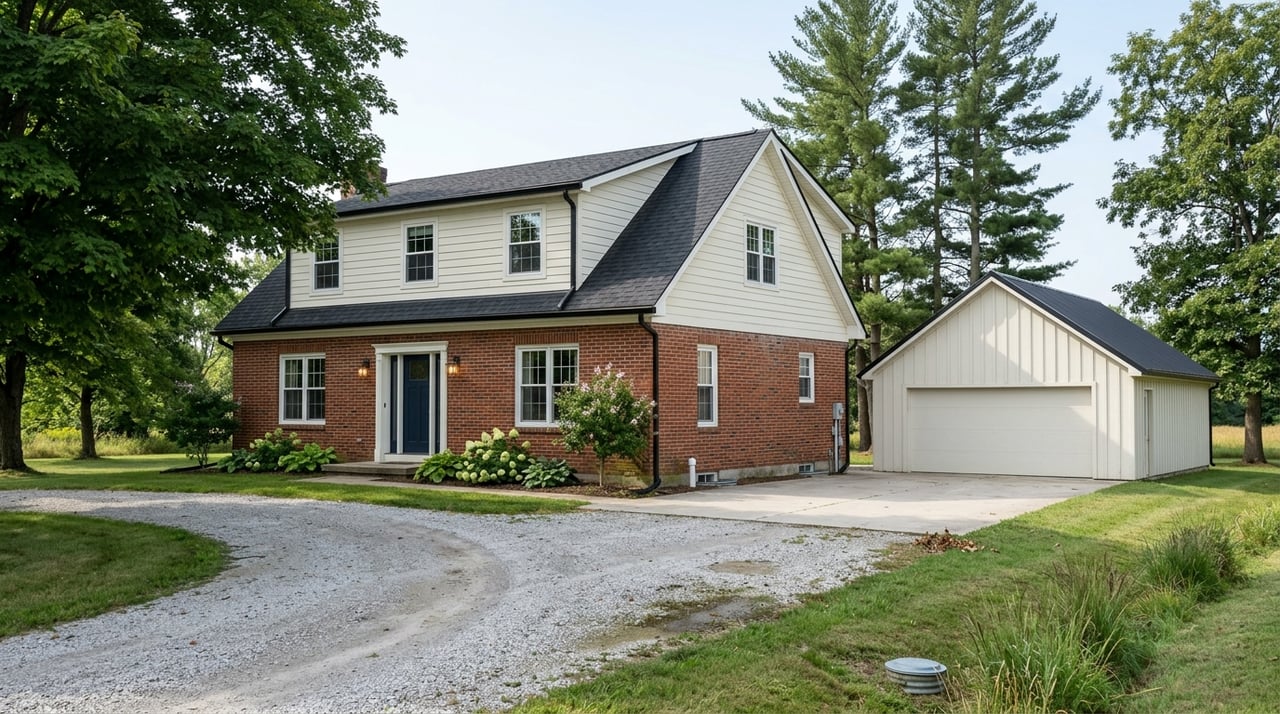
Rural properties in and around Elizabethtown-Kitley can vary widely in size and setup. Based on the research provided, buyers may encounter everything from smaller country lots near Brockville to larger parcels with farmhouses, barns, paddocks, workshops, detached garages, tree cover, and long driveways.
This variety is part of the appeal. It also means that two properties with similar price points can have very different value depending on acreage, zoning, servicing, and outbuilding utility.
A rural property can look perfect at first glance, but the right questions usually reveal whether it truly fits your goals. If you are considering a hobby farm or acreage purchase, start here:
The best rural purchases are usually the result of careful verification, not guesswork. A beautiful farmhouse, bungalow, or acreage can absolutely support the lifestyle you want, but only if the zoning, servicing, and site conditions align with your plans.
That is why a thoughtful buying process matters so much in Elizabethtown-Kitley. When you combine local planning insight with practical property review, you can move forward with much more confidence.
If you are exploring rural living or hobby farm opportunities near Brockville, Gerard Cabrera can help you evaluate the lifestyle, property features, and local context so you can make a well-informed move.
Stay up to date on the latest real estate trends.
Get assistance in determining current property value, crafting a competitive offer, writing and negotiating a contract, and much more. Contact me today so I can guide you through the buying and selling process.